Auto-Bottom vs Tuck-End vs Seal-End: Which Box Structure Fits Your Product?
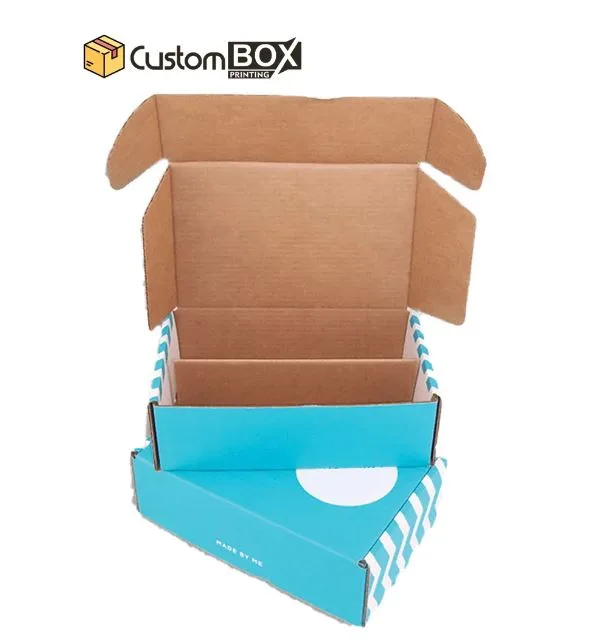
Auto-bottom, tuck-end, and seal-end are the three most common paperboard folding-carton structures used in US custom packaging. Each solves a different problem: auto-bottom optimizes for assembly speed and load, tuck-end optimizes for cost, seal-end optimizes for tamper-evidence. If you're a US brand founder or packaging manager picking a carton structure for a new SKU, this guide walks through the practical trade-offs so you pick right the first time.
Quick comparison
- Auto-bottom (4-corner-glue / crash-bottom): Fastest hand-assembly (one motion pops open with locked bottom), holds heavier loads, costs ~$0.05-$0.10 more per unit than tuck-end.
- Tuck-end: Cheapest to manufacture, slowest to hand-assemble, lower load rating, ideal for lightweight small-format packaging.
- Seal-end (straight-tuck-seal): Glue-sealed at both ends by the manufacturer, delivers tamper-evidence, required for OTC drugs and many retail-shelf SKUs.
Auto-bottom: pop open, lock at the base
Auto-bottom (also called 4-corner-glue or crash-bottom) construction has four flaps at the bottom pre-glued at manufacture. When the flat carton is squeezed open, the bottom locks itself into a rigid base in one motion — no glue-gun, no tape, no manual folding.
When to use auto-bottom
- You assemble in-house at 500+ boxes/week (bakery, gift-set assembler, DTC fulfillment).
- The product weighs more than 1 lb and needs a locked bottom for transit.
- The customer sees the box (a clean locked bottom reads more considered than a taped bottom).
- Common applications: cupcake, cake pop, macaron, chocolate, gift boxes, mailer boxes holding heavier products.
Cost and load
Standard auto-bottom in 20pt SBS runs ~$1.15 per unit at 500. Load rating: 3-5 lb comfortably in 20pt SBS, 5-8 lb in 24pt SBS, 8-15 lb in corrugated E-flute. See custom auto-bottom boxes for full specs and pricing.
Tuck-end: cheapest, most flexible
Tuck-end is the classic folding carton — cardstock with folded tabs at the top and bottom that tuck into slits to close the box. Two main variants:
- Reverse tuck-end (RTE): Top and bottom tuck from opposite sides. The default for cosmetics, skincare, and most small-format primary packaging.
- Straight tuck-end (STE): Top and bottom tuck from the same side. Common for retail SKUs where hang-tab presentation matters.
When to use tuck-end
- The product is lightweight (under 1 lb).
- Per-unit cost matters more than assembly speed.
- The customer opens and closes multiple times (tuck flaps re-tuck; auto-bottom and seal-end are single-open formats).
- Common applications: serum, lipstick, lip balm, supplement, cosmetic, ampoule, toner, essence boxes.
Cost and load
Standard reverse tuck-end in 18pt SBS runs ~$0.85-$1.05 per unit at 500 depending on size and finishing. Load rating: 0.5-2 lb comfortably in 18pt SBS, 2-4 lb in 24pt SBS. See custom tuck-end boxes and reverse tuck-end boxes for full specs.
Seal-end: tamper-evident, sealed both ends
Seal-end (straight-tuck-seal) construction glue-seals both the top and bottom tuck flaps at the manufacturer. The customer opens the carton by tearing along a perforated line or peeling the glue-seal. Any prior opening leaves visible damage — the tamper-evidence signal every regulated category needs.
When to use seal-end
- Tamper-evidence is required (FDA guidance for OTC drugs, many food and supplement retail SKUs).
- The product must arrive sealed at retail (national-retail shelves at Target, Walmart, CVS).
- The product is small or loose (tablets, pills, small hardware) that would fall out of an unlocked tuck flap.
- Common applications: OTC medicine, supplement, capsule, softgel, dry food, cosmetic starter kits.
Cost and opening mechanism
Standard seal-end in 20pt SBS runs ~$0.95 per unit at 500. Opens two ways: tear-strip perforation (cleanest, most gift-worthy, +$0.03-$0.05/unit) or peel-away glue-seal (cheapest, most secure, included in base). See custom seal-end boxes for full specs.
Which structure fits your product?
| Product | Best structure | Why |
|---|---|---|
| Lipstick / mascara / eyeliner | Reverse tuck-end | Lightweight, low cost, multi-open |
| Serum / ampoule / essence dropper | Reverse tuck-end | Snug bottle fit, low cost |
| OTC medicine / vitamin bottle | Seal-end | Tamper-evidence per FDA guidance |
| Cupcake / cake pop / macaron | Auto-bottom | Load-bearing, fast in-house assembly |
| Chocolate / candy / truffle | Auto-bottom or seal-end | Depends on gift-tier vs retail-shelf |
| DTC gift box (mid-weight) | Auto-bottom | Locked bottom, fast fulfillment |
| Small hardware / cosmetic accessory | Seal-end or blister card | Tamper-evidence at retail |
| Subscription outer carton | Auto-bottom or heavy tuck-end | Load-bearing for multi-SKU kits |
| Retail hang-tab SKU | Straight tuck-end + hang tab | Peg-wall compatible |
All three ship flat
Auto-bottom, tuck-end, and seal-end are all folding cartons — they pack flat in bulk for freight, then fold or lock into shape at assembly. Flat shipping keeps freight cost low regardless of which structure you pick. A US-based printer can ship any of the three to any US state with 2-5 day Ground transit and free shipping.
Common combinations with hang-tab, window, and finishing
All three base structures can add:
- Hang-tab at the top for retail peg display — see hang tab boxes.
- Die-cut window on any panel with PET film patch to show product.
- Foil stamping, embossing, spot UV, soft-touch lamination for premium finish.
- Printed insert or divider to hold multiple SKUs upright (e.g. sampler boxes, coffee sample boxes).
How to pick for your product
- Weigh the product. Over 1 lb → auto-bottom or corrugated. Under 1 lb → tuck-end or seal-end.
- Check for tamper-evidence needs. OTC, supplements, retail-shelf food → seal-end.
- Estimate in-house assembly volume. Over 500 boxes/week → auto-bottom saves 5-15 seconds per box.
- Decide on retail context. Peg wall → add a hang-tab to a tuck-end or seal-end.
- Request a 3D mockup. A US-based printer builds all three dielines free — see one in the format you're considering before you commit.
Related reading
Ordering custom boxes — common questions
What is the minimum order for custom boxes?
Runs start at 100 units for folding cartons (cosmetic, food, bakery, CBD, mailer), 50 units for rigid setup boxes, and 5,000 units for printed paper (deli, butcher, tissue, kraft, sandwich wrap). No die, plate, or setup fees at any quantity.
Do you ship custom boxes free in the US?
Yes — standard shipping is free anywhere in the contiguous United States on every order. Rush production (3–5 business days) and expedited shipping are available for an additional fee.
How long does a custom box order take?
Typical timeline is 1 business day for a quote, 1–2 days to approve a free 3D digital mockup, then 7–10 business days for production plus 2–5 business days for free US shipping. Rush production is available on request.
Can I see a sample before I commit to a full order?
Yes — free 3D digital mockup with every quote, and a physical sample on request (refunded on your first order) before you place a production run. You can also design and preview your box live in our free 3D box designer.
What artwork files do you need to start printing?
Print-ready PDF, AI, EPS, or PSD at 300 DPI in CMYK with 0.125" bleed is ideal. Don't have artwork? Our in-house design team builds your dieline and preps files at no cost — just send your logo and any brand references.
Do you charge setup, plate, or die-cutting fees?
No — there are no setup, plate, die, or tooling fees at any quantity. Custom dielines, artwork prep, 3D mockups, and physical samples are all included free with every order.