How Much Do Custom Boxes Cost? A 2026 Pricing Guide
It is the first question almost every brand asks us, and the honest answer is the same one any reputable US packaging manufacturer should give: it depends. Custom box pricing is not a single number on a shelf. It is the sum of a handful of decisions you make about size, structure, material, printing, and quantity. The good news is that once you understand those levers, you can predict where your cost will land and shape your packaging to hit a budget. Here is a transparent breakdown of what moves the price up or down in 2026.
Why there is no flat price for custom boxes
A custom box is built to your exact dimensions and brand, so the cost is calculated, not looked up. Two boxes that look similar can differ a lot in price because one uses a heavier board, an extra ink pass, or a soft-touch laminate. Rather than quoting a misleading flat rate, we price your specific job. That is also why a real quote, not a guess from a chart, is the only number you should plan around.
The main factors that drive cost
Most of your custom boxes price comes down to a short list of variables. When you request pricing, these are the things that shift the total:
- Quantity — the single biggest lever; more units lower the per-box cost.
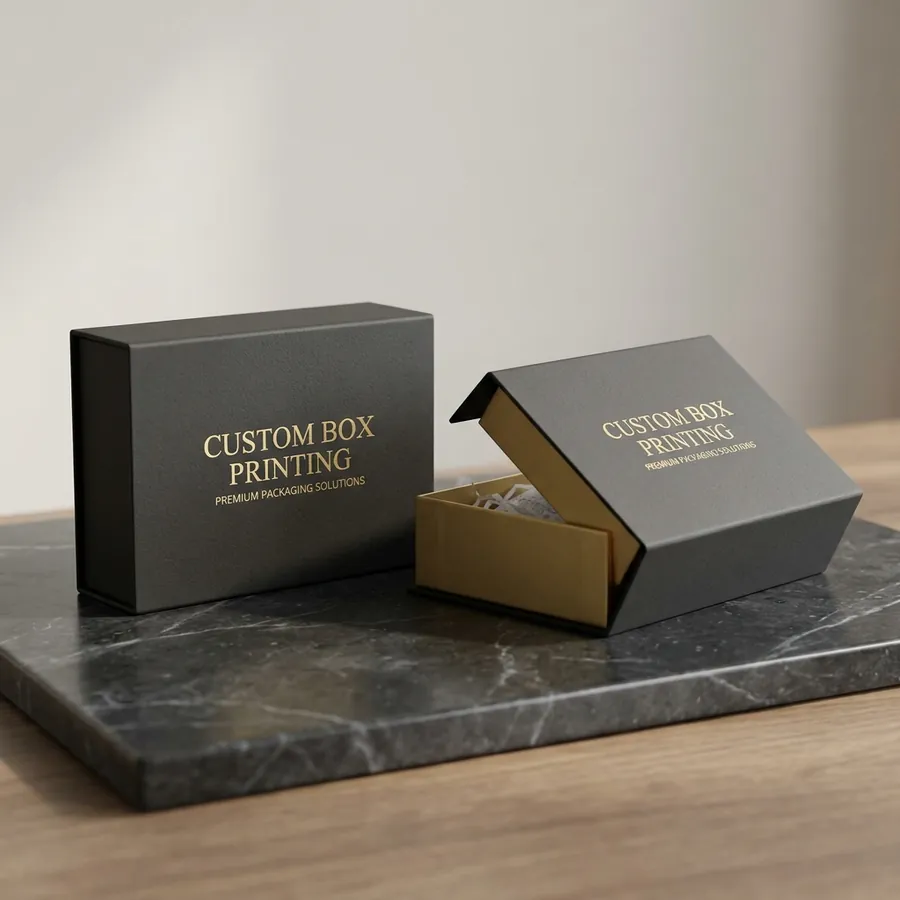
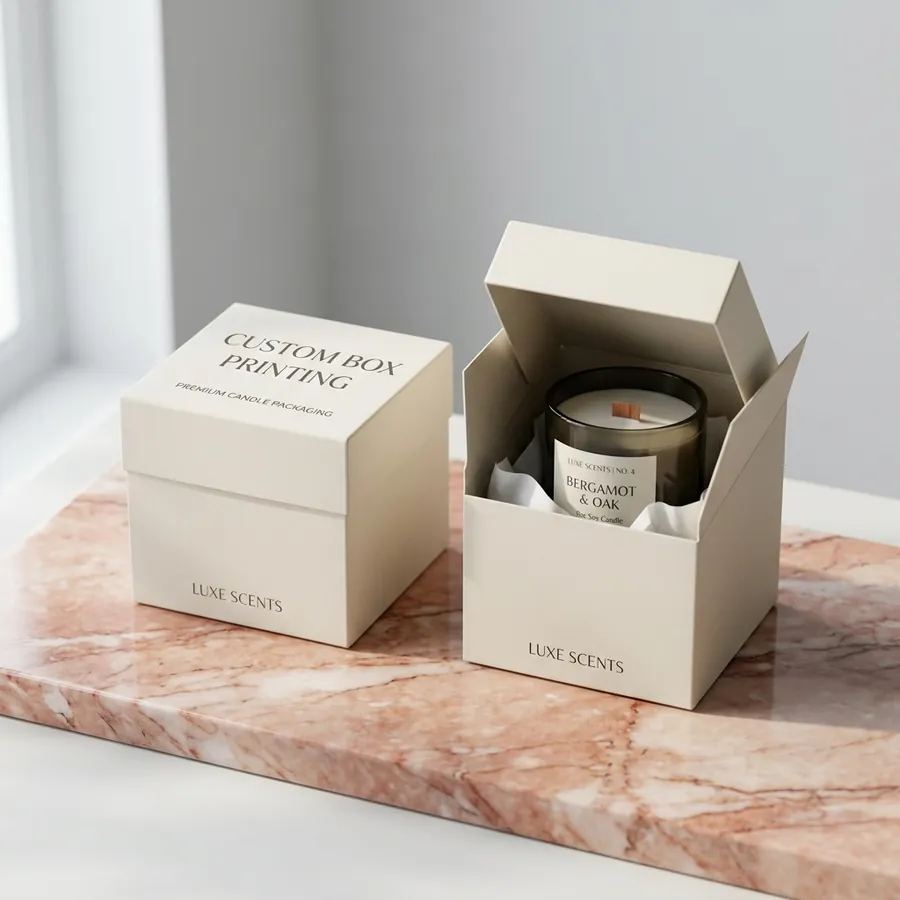
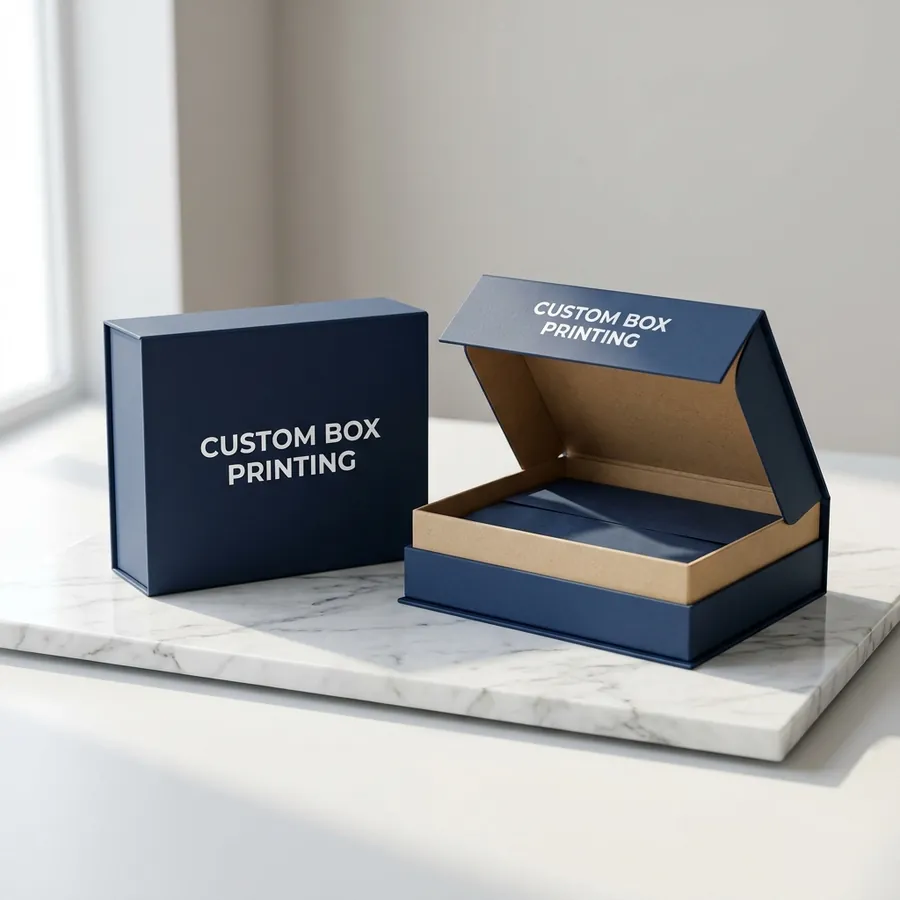
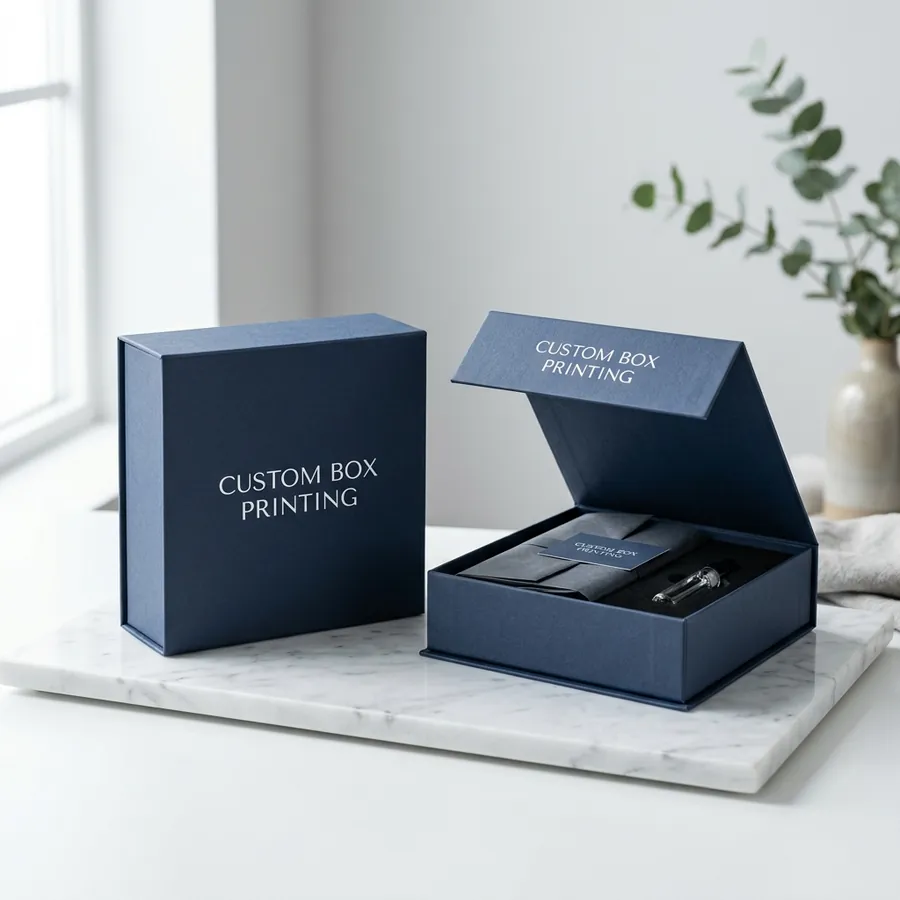
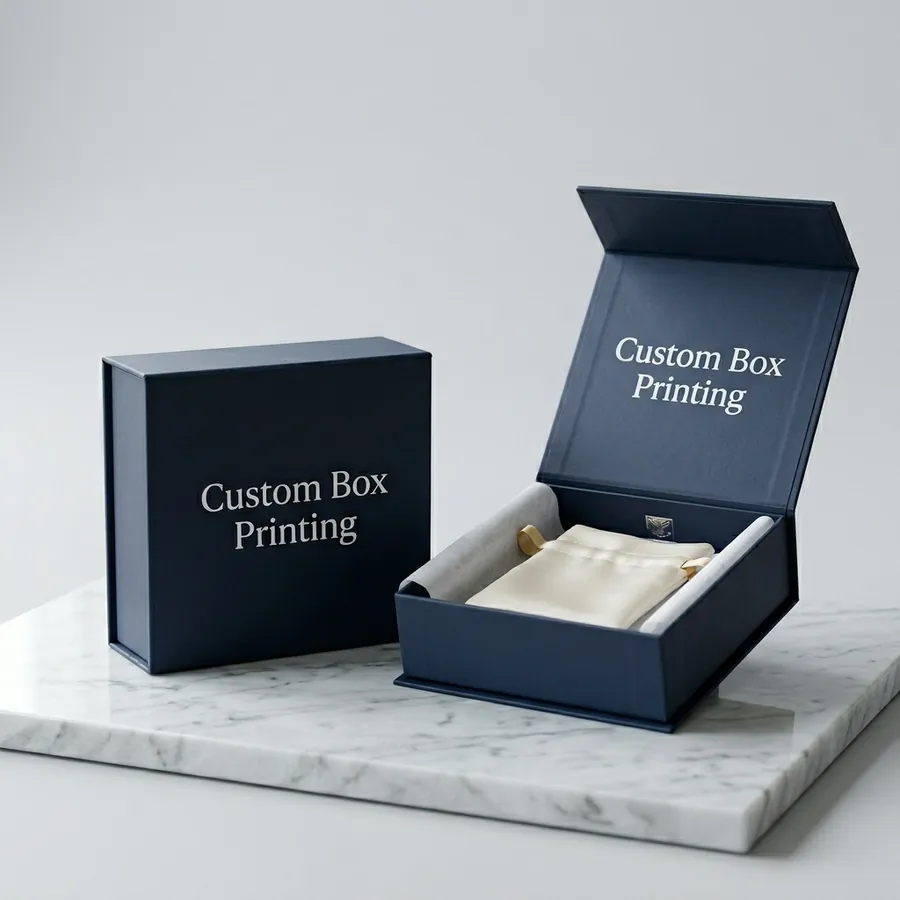
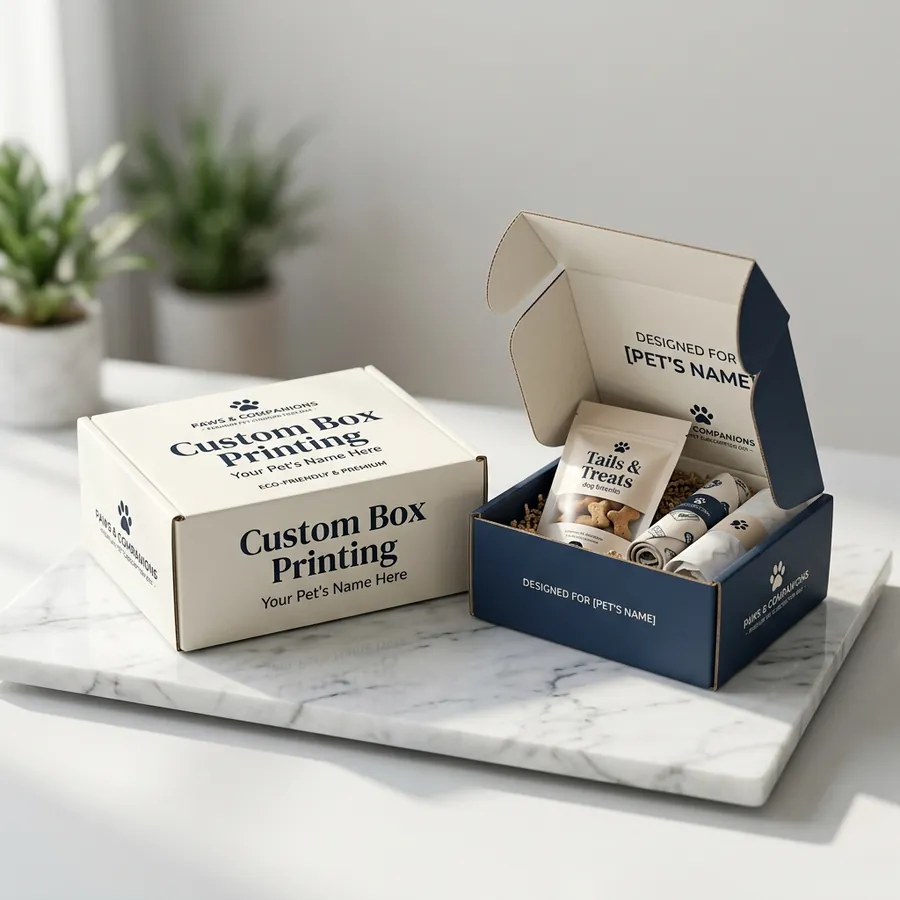
- Box style and structure — a simple tuck-end folding carton costs less than a rigid box, mailer, or sleeve-and-tray.
- Material and thickness — heavier board, kraft, or corrugated stock costs more than lighter cardstock.
- Size — larger boxes use more material per unit.
- Print coverage — full bleed and dark, ink-heavy artwork costs more than light coverage or one-color print.
- Finishes — lamination, foil stamping, spot UV, and embossing each add cost.
- Inserts — partitions, foam, or molded pulp to protect product add material and assembly.
Quantity: why per-unit cost drops at volume
Packaging has real fixed setup work behind it, plate creation, die preparation, and press make-ready, that happens once no matter how many boxes you order. When you order 100 units, that work is spread across 100 boxes. At 1,000 or 5,000, it is spread much thinner, so the per-unit price falls sharply. This is why your cost per box at higher volumes can be a fraction of what it is at the smallest run.
Why no setup, plate, or die fees matters for short runs
Here is where many suppliers quietly hurt small and growing brands: they tack on setup, plate, and die charges that make short runs painfully expensive per unit. We do not. There are no setup, plate, or die charges, and we run jobs from just 100 units (cardstock MOQ). That means a startup testing a new SKU or a seasonal limited edition is not penalized for ordering small, and your per-box cost reflects the actual production, not hidden tooling fees.
Printing and finishes: where brands spend or save
Full-color CMYK printing is included, and if your brand relies on an exact color, Pantone matching is available at no extra cost, so you are not paying a premium just to keep your brand consistent. Finishes are where you choose your spend. A matte or gloss laminate is an economical way to elevate a box, while foil stamping, spot UV, and embossing add a premium tactile feel and a premium line item. If budget is tight, lean on strong artwork and a single elegant finish rather than stacking several.
How to budget without guessing
Think in ranges, not fixed figures. To lower cost: order in larger quantities, choose a standard folding style, keep the board only as heavy as the product needs, and limit premium finishes. To justify a higher cost: heavier rigid construction, full coverage print, multiple finishes, and custom inserts all signal a premium unboxing. Decide what your product and margins can support, then ask for a quote built around it. Because shipping within the contiguous US is free, you can also budget the landed cost without surprise freight.
The free quote and custom sample (refunded on your first order) workflow
The way to remove risk is simple. Start with a free quote on your exact specs, no obligation. Our team provides free design support and a dieline, plus a free 3D mockup so you can see the box before anything is printed. When you want to hold the real thing, we can send a physical sample (refunded on your first order), so it is not a sunk cost, it is a deposit on confidence. Typical turnaround once approved is 7 to 10 business days.
Get your number
Stop guessing and get a real figure for your project. Request a free quote with your size, quantity, and finishes, or build and visualize your packaging right now in our 3D box designer. You will get transparent, US-shipped pricing with no setup fees and free shipping built in.
Ordering custom boxes — common questions
What is the minimum order for custom boxes?
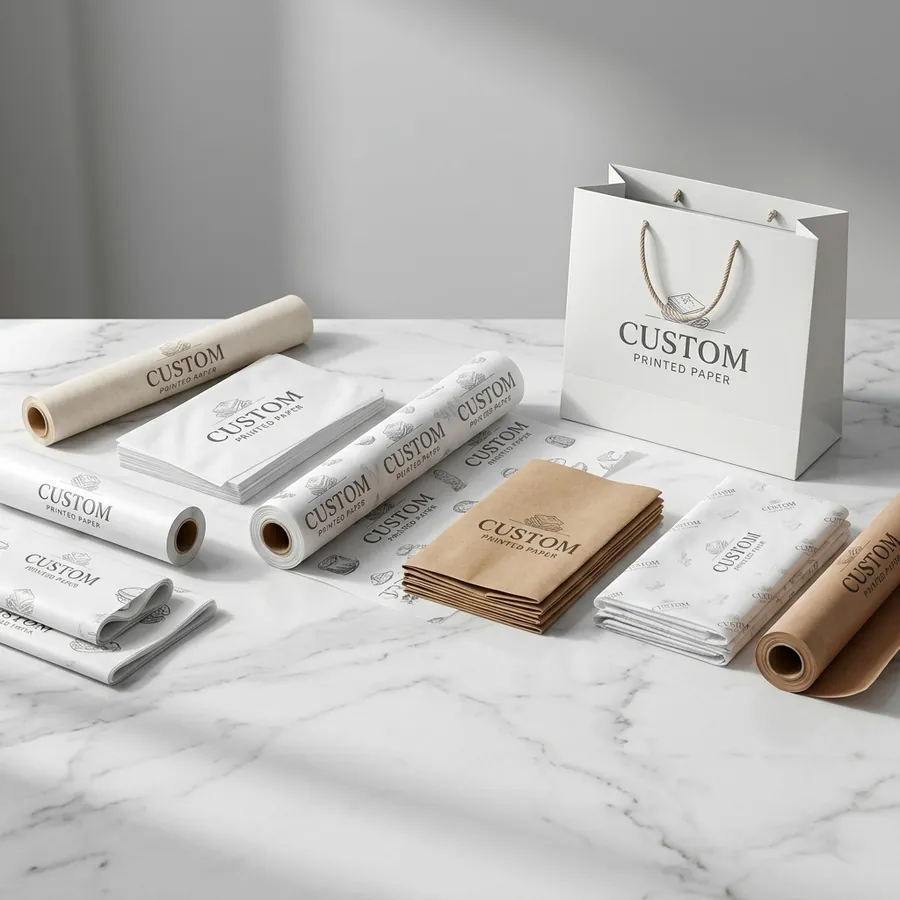
Runs start at 100 units for folding cartons (cosmetic, food, bakery, CBD, mailer), 50 units for rigid setup boxes, and 5,000 units for printed paper (deli, butcher, tissue, kraft, sandwich wrap). No die, plate, or setup fees at any quantity.
Do you ship custom boxes free in the US?
Yes — standard shipping is free anywhere in the contiguous United States on every order. Rush production (3–5 business days) and expedited shipping are available for an additional fee.
How long does a custom box order take?
Typical timeline is 1 business day for a quote, 1–2 days to approve a free 3D digital mockup, then 7–10 business days for production plus 2–5 business days for free US shipping. Rush production is available on request.
Can I see a sample before I commit to a full order?
Yes — free 3D digital mockup with every quote, and a physical sample on request (refunded on your first order) before you place a production run. You can also design and preview your box live in our free 3D box designer.
What artwork files do you need to start printing?
Print-ready PDF, AI, EPS, or PSD at 300 DPI in CMYK with 0.125" bleed is ideal. Don't have artwork? Our in-house design team builds your dieline and preps files at no cost — just send your logo and any brand references.
Do you charge setup, plate, or die-cutting fees?
No — there are no setup, plate, die, or tooling fees at any quantity. Custom dielines, artwork prep, 3D mockups, and physical samples are all included free with every order.